Irtayag fashion
#ourconnectioneverforever


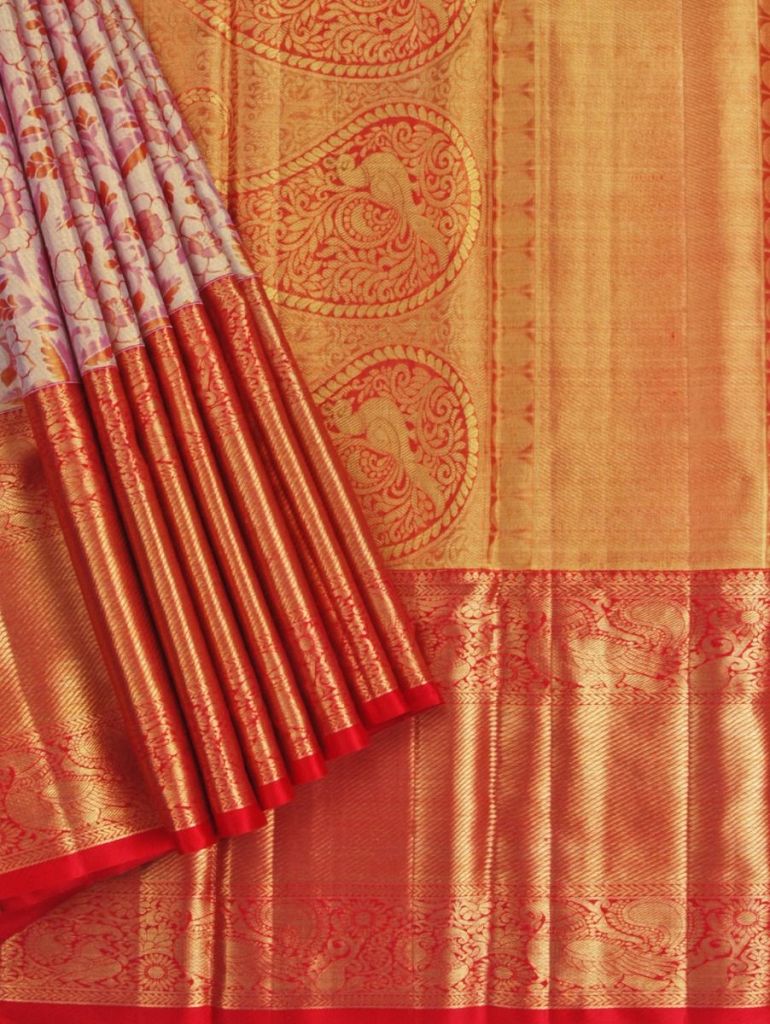
Kanjeevaram Saree
The speciality of the saree lies texture, glimmer, permanence and refinement which is why it is popularly known as the queen of all sarees. The material used is the heavy Kanchipuram silk and is also a bit expensive because of its finesse and weight
Weaving
The saris are woven from pure mulberry silk thread. The pure mulberry silk and the Zari used in the making of Kanchipuram saris comes from South India.
Design
Saris are distinguished by their wide contrast borders. Temple borders, checks, stripes and floral (buttas) are traditional designs found on a Kanchipuram saris. The patterns and designs in the kanchipuram saris were inspired with images and scriptures in South Indian temples or natural features like leaves, birds and animals. These are saris with rich woven mundhi showing paintings of Raja Ravi Varma and epics of Mahabharata and Ramayana. Kanchipuram saris vary widely in cost depending upon the intricacy of work, colours, pattern, material used like zari (gold thread) etc. The silk is also known for its quality and craftsmanship, which has helped earn its name
Significance
Kanchipuram saris woven with heavy silk and gold cloth are considered to be special and are worn on occasions and festivities
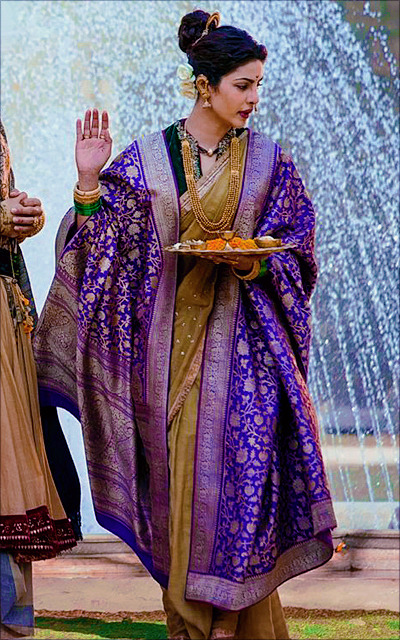
nauvari saree
The Nauvari saree, which means Nine Yards, has a historical milieu. It is said that during the Maratha rule, women were entrusted to help their fellow male warriors. To facilitate easy movement, Maharashtrian women introduced the Nauvari saree which resembled a male trouser
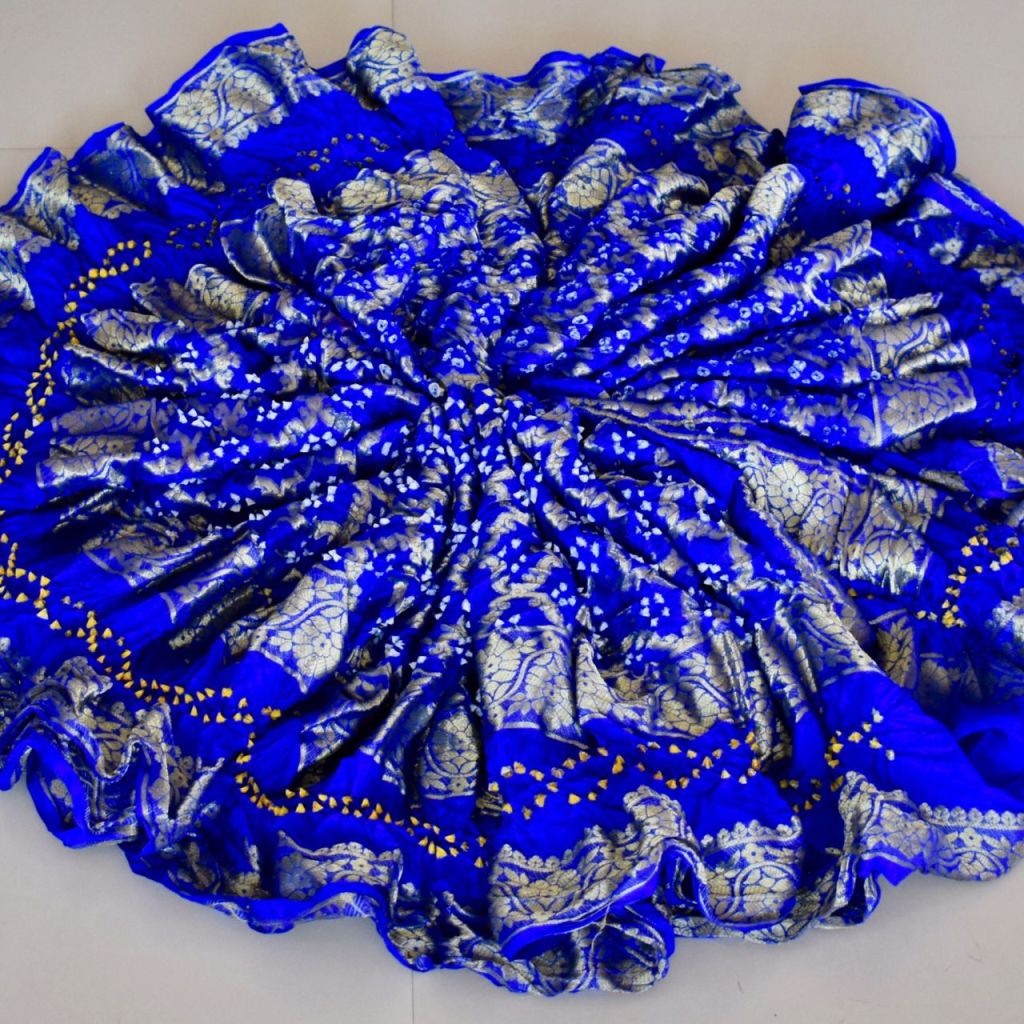
bandhani saree
Bandhani is a type of tie-dye textile decorated by plucking the cloth with the fingernails into many tiny bindings that form a figurative design. The term bandhani is derived from the Sanskrit verbal root bandh (“to bind, to tie”).
Variety of Bandhani
Depending on the manner in which the cloth is tied, Bandhej patterns include Lehriya, Mothra, Ekdali etc. Bandhani is offered in different varieties; Ekdali means single knot, Trikunti means three knots; Chaubandi means four knots and Boond means small dot with a dark centre.
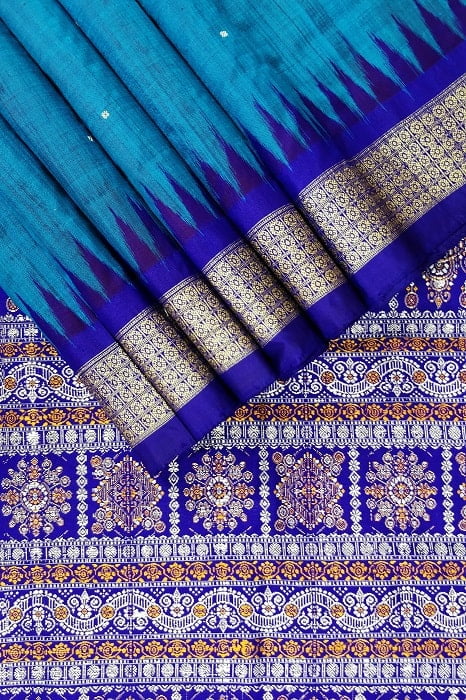
bomkai saree
The ancient belief is depicted in its border Mostly the design of fish is seen in the sari as it is believed to be a sign of success and affluence. The most charming part is its threadwork in the designs of the border and the palloo. The appearance of the saree is related to simplicity and has a tribal tinge in it
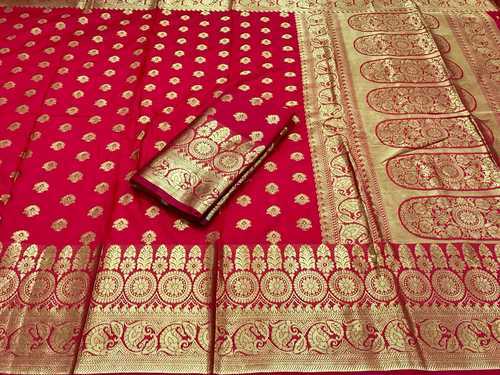
banarasi saree
A Banarasi sari is a sari made in Varanasi, an ancient city which is also called Benares (Banaras). The saris are among the finest saris in India and are known for their gold and silver brocade or zari, fine silk and opulent embroidery.
Banarasi sarees are world famous because of their their gold, zari, silver handwork, natural silk and excellent embroidery
Varieties
There are four main varieties of Banarasi sari, which includes pure silk (Katan), Organza (Kora) with Zari and silk; Georgette, and Shattir, and according to design process, they are divided into categories like, Jangla, Tanchoi, Vaskat, Cutwork, Tissue and Butidar
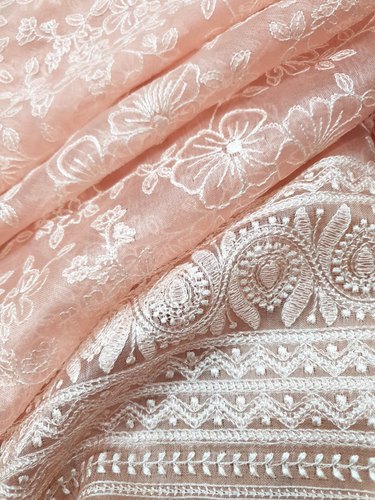
Chikankari Saree
The technique of creation of a chikan work is known as chikankari. Chikan is a delicate and artfully done hand embroidery on a variety of textile fabrics like muslin, silk, chiffon, organza, net, etc. White thread is embroidered on cool, pastel shades of light muslin and cotton garments
 Irtayag fashion